

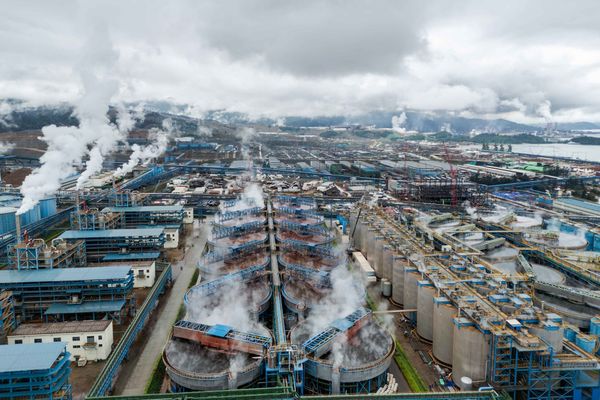
Then Where Will We Live • Garry Lotulung
In Indonesia, nickel mining is booming as global demand for batteries surges. Its impacts—on workers, on communities and on nature—are deeply felt.
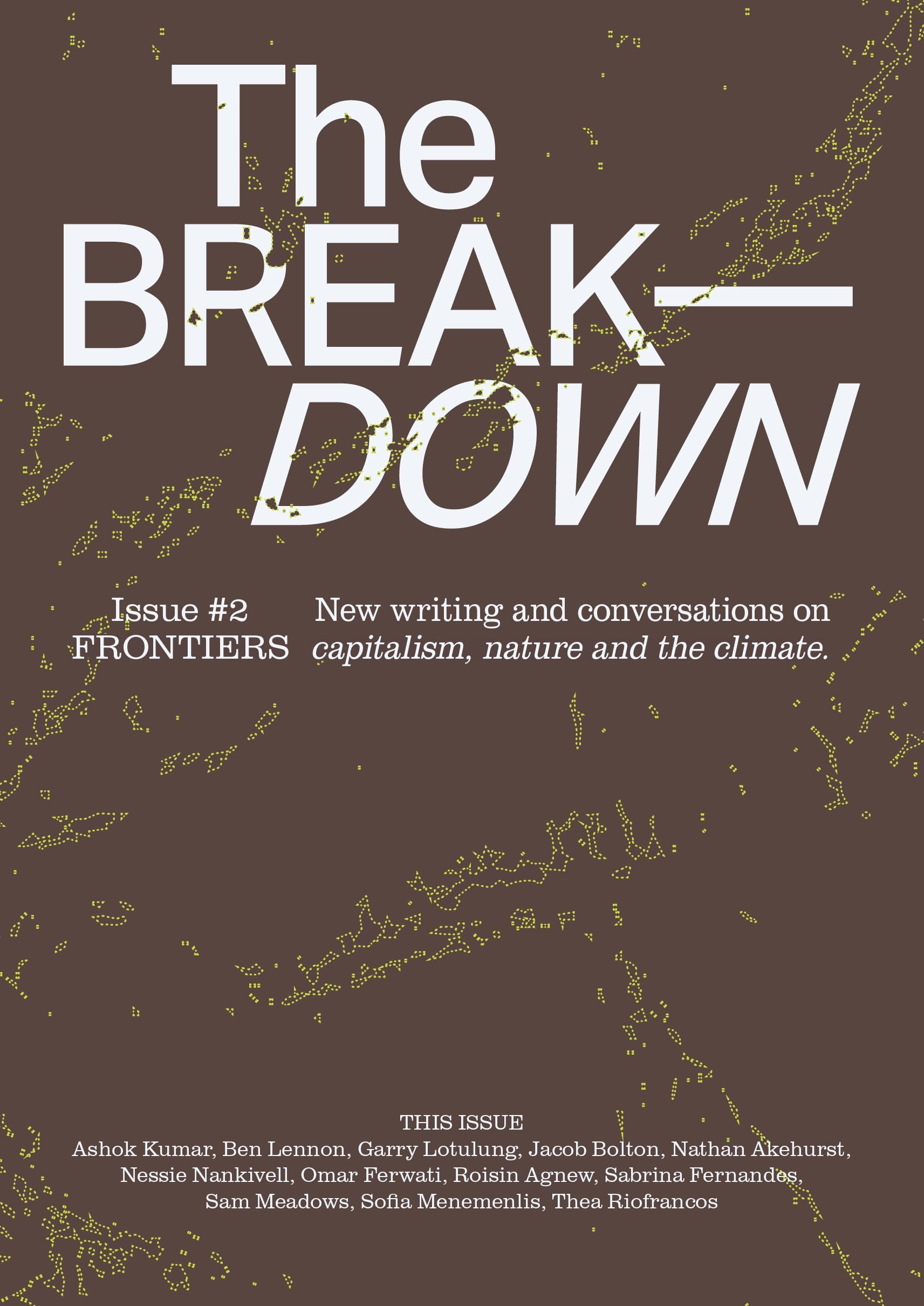
The idea of the frontier is contested: a border, a terra nullius, a site of struggle. In our second Issue, our writers approach the idea of frontiers in the climate crisis from many perspectives, sending reports from the frontlines of extractive industries, exploring new avenues of risk and resistance, and showing, in the words of contributor Thea Riofrancos, how frontiers are “never exhausted by the economic and political imperatives that designate them as such. They exceed them.”
In Indonesia, nickel mining is booming as global demand for batteries surges. Its impacts—on workers, on communities and on nature—are deeply felt.

The greatest obstacle for the energy transition is not production or hard physical constraints—it is the skilled labour needed to transform our infrastructure and economy.

“Climate migration” defies clear definition, but as the impacts of climate change mount and politicians stoke anti-migrant hostility, the climate movement must meet this challenge head-on.

As the fossil fuel industry consolidates into an ever smaller number of vast firms, new strategic openings for disruption emerge.
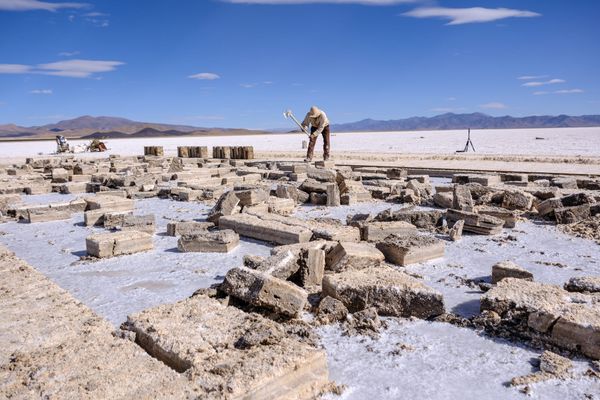
The Lithium Triangle, spanning Argentina, Bolivia and Chile, contains over half the world’s lithium reserves, essential for the energy transition. But mining here is fraught with human, cultural, political and ecological questions.